“Generator or battery?” is the biggest fork in backup power, and most pages answering it are trying to sell you one of the two. Full disclosure: this site covers battery gear and earns affiliate commissions on the battery side only. We don’t review or sell generators, and fuel equipment stays out of our lane. That could bias us, so this guide commits to the opposite of a sales pitch: a plain accounting of where each tool wins, with every assumption written down. In several scenarios below, the honest answer is a generator, and we say so.
What each machine actually is
A portable gasoline generator is a small engine spinning an alternator. It produces electricity continuously for as long as it has fuel, typically from around 1,000W in small inverter units to 10,000W and beyond in open-frame models, and it must run outdoors. Always.
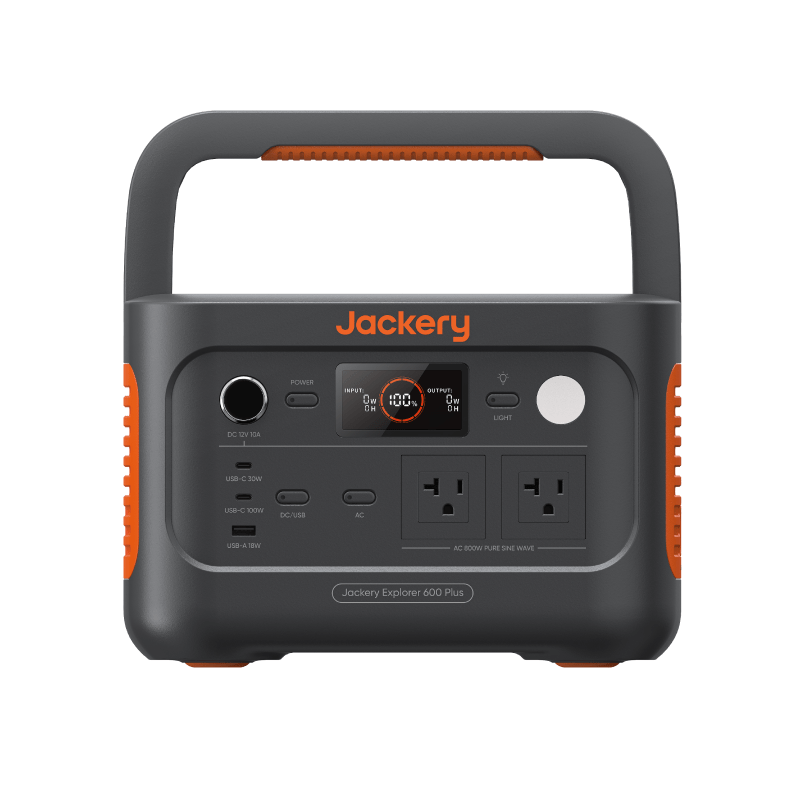
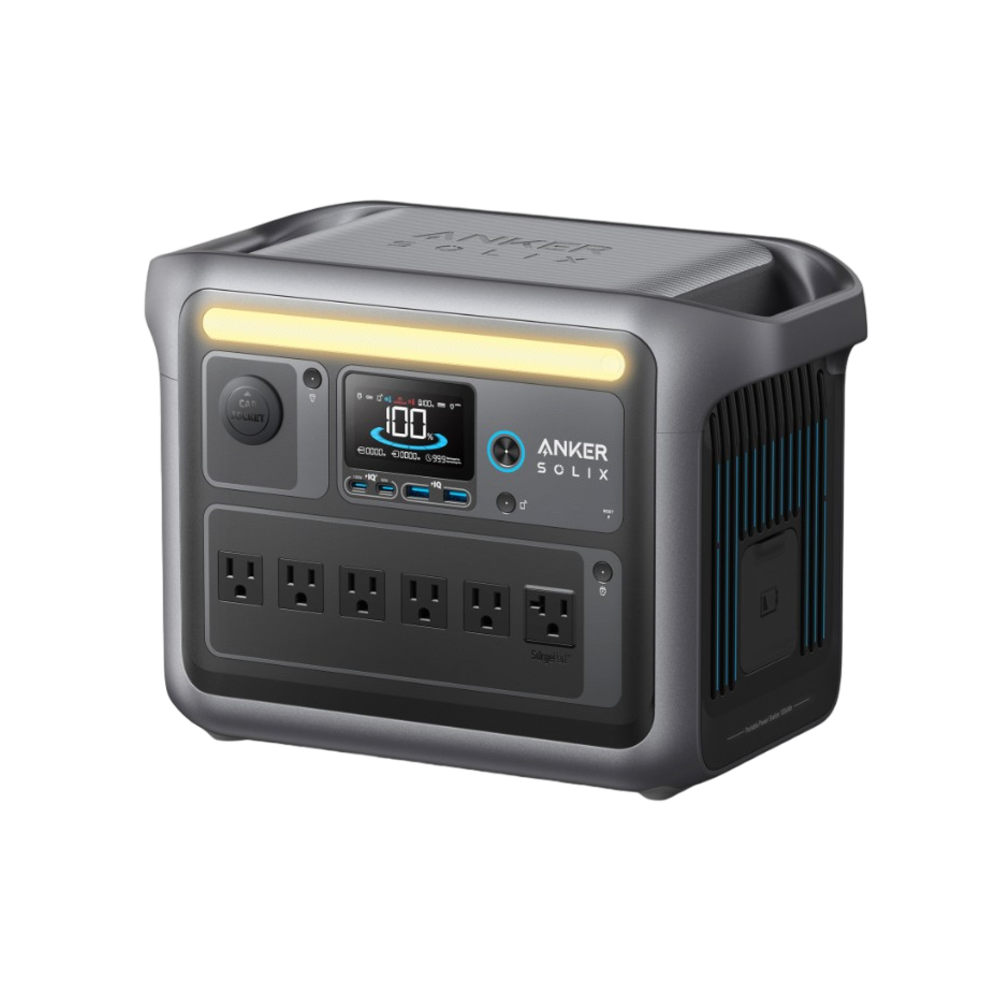
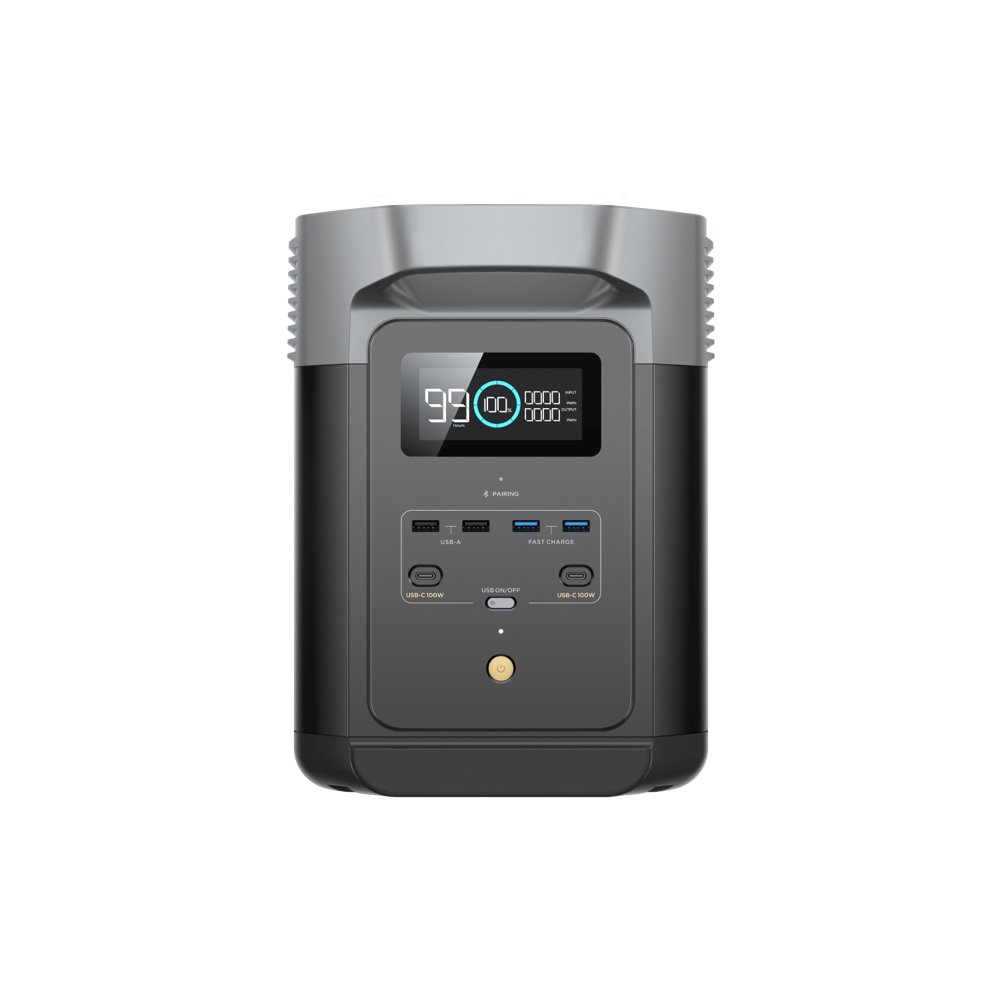
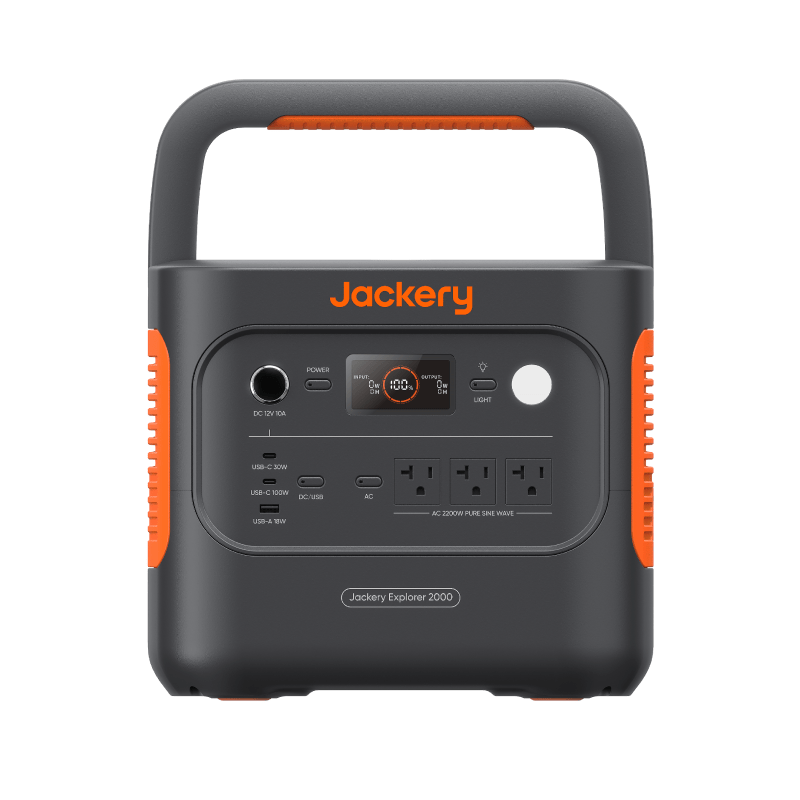
A battery power station is a large rechargeable battery with an inverter. It stores electricity made earlier (from a wall outlet, a car port, or solar panels) and releases it silently, anywhere, including next to your bed. It cannot make energy. When it’s empty, it’s a heavy box until you find a way to recharge it.
That one difference, produces versus stores, drives nearly every trade-off that follows.
Indoor safety: not a close call
Start here, because this criterion overrules every other one. A gasoline engine produces carbon monoxide, and portable generators kill an average of nearly 100 people in the U.S. every year through CO poisoning, according to the Consumer Product Safety Commission. The CPSC’s operating rule is strict: outside only, at least 20 feet from the house, exhaust pointed away from any building opening. Not in the garage with the door up, not in the basement, not on a covered porch or apartment balcony. Opening doors and windows does not make an indoor generator safe.
A battery power station has no combustion and no exhaust. You can run it in a sealed bedroom, a nursery, or a studio apartment without a second thought. If any part of your backup plan involves powering something indoors with the machine sitting indoors, the decision is already made, and it’s the battery.
If you do end up buying a generator for outdoor use, the CPSC recommends models with a CO shut-off safety feature, plus working CO alarms in the home. Those are facts worth having; they are not product recommendations from us.
Noise
Manufacturer-published noise figures cluster into three tiers. Open-frame conventional generators typically run 70 to 90 dB(A), in lawnmower territory. Quiet inverter generators manage roughly 50 to 60 dB(A) at light load, near normal conversation, though brands measure at different distances, so compare spec sheets carefully. A battery power station emits fan hum at most; many are effectively silent at low loads.
This matters more than it looks on paper. Quiet hours in campgrounds and dense neighborhoods, a baby sleeping through an outage, and the simple fact that a running generator announces to the whole street that you have one: all of these push overnight and close-quarters duty toward the battery.
Fuel logistics vs recharging
A generator is a fuel commitment. Gasoline goes stale in months unless stabilized, so you either rotate your stored cans or risk a gummed carburetor at the worst moment. During a regional outage, the gas stations near you may have no power to pump. Dual-fuel models that also run on propane ease this considerably, since propane stores indefinitely, though the exhaust still contains carbon monoxide and the outdoors-only rule does not change.
A power station’s logistics run in the other direction. Before a storm you top it off from a wall outlet for pennies. During an outage you can recharge from a car while driving, or from solar panels if you own them. The failure mode is the mirror image of the generator’s: with the grid down, no sun, and nowhere to drive, an empty battery stays empty, while a generator owner with a full can keeps making power.
Running cost per kWh, both ways
Here is the math, with the assumptions named so you can rerun it.
Battery route. U.S. residential electricity averaged about 18.8 cents per kWh as of April 2026, per the Energy Information Administration. Assume roughly 90% charge efficiency going in and this site’s standard 85% inverter efficiency coming out, about 77% round trip. That lands near 25 cents per delivered kWh. (Related but separate: when sizing capacity, we also hold back a 10% reserve, so a station’s usable energy is rated Wh × 0.85 × 0.9, about 765Wh from a 1,000Wh unit.)
Generator route. A 2,000W-class inverter generator holding a steady 500W typically burns 0.10 to 0.17 gallons per hour, per common manufacturer runtime specs, which works out to roughly 3 to 5 kWh of electricity per gallon. At the national average gasoline price of about $3.78 per gallon (EIA, week of July 6, 2026), that is roughly 75 cents to $1.30 per delivered kWh. Small engines convert only a modest fraction of fuel energy into electricity, which is why the number is high.
So the battery is several times cheaper per kWh. Case closed? No, and this is the part most comparisons skip: you buy battery capacity up front, but you buy generator fuel only as needed. Using our own category price estimates, station hardware runs roughly $500 to $950 per rated kWh of storage. Suppose your outage essentials add up to 5kWh per day (a full-size fridge alone averages 2.4 to 3.6kWh per day; see our fridge backup guide). A generator covers that on 1 to 1.7 gallons, roughly $4 to $7 a day in fuel. Covering three such days on batteries alone means about 15kWh of storage, well north of $7,500 in hardware before conversion losses. That gap is the entire reason generators still exist.
Maintenance and lifespan
A generator is an engine, with an engine’s chore list: oil changes on the schedule in the manual, air filter and spark plug service, fuel stabilizer and rotation, and periodic test runs so it actually starts when needed. Maintained, it can last many years. Neglected, it becomes the classic story of a machine that won’t start the morning after the storm.
A power station asks for almost nothing: store it partially charged, top it off every few months per the manual, keep it out of extreme heat. LiFePO4 models are commonly rated for thousands of charge cycles. The trade-off is that capacity fades gradually with age and the sealed electronics are not something you service in the driveway.
Decision table by scenario
| Scenario | Honest pick | Why |
|---|---|---|
| Apartment or condo | Battery | There is no safe or legal place to run an engine; the 20-foot rule is impossible on a balcony. See the apartment checklist. |
| Short outages (a few hours to a day) | Battery | Silent, indoor, zero fuel errands; recharges from the wall when the grid returns |
| Multi-day outages with heavy loads | Generator, or hybrid | Fuel scales by the gallon; storing several days of energy in batteries costs thousands up front |
| Medical equipment (CPAP, oxygen concentrator, powered bed) | Battery first, plus a longer-outage plan | Runs indoors next to the patient, silently, with no CO risk; the FDA’s home medical device outage guide covers planning, and your utility may keep a medical-needs registry |
The honest hybrid answer
Households that ride out long outages every year tend to converge on the same setup, and it is not either/or. The generator runs outside in daytime blocks, carrying the heavy loads and recharging the power station at the same time. The station then carries the night: fridge cycling, phones, a CPAP, a lamp, in complete silence, with the generator off and the CO risk window closed. Total fuel burn drops, the neighbors sleep, and each machine spends its hours doing the thing it is genuinely better at. If you already own a generator, adding a mid-size station is the cheapest meaningful upgrade to how outages actually feel.
When a generator honestly wins
If your outages run multiple days and your must-run list includes a well pump, sump pump, or electric heating and cooling, batteries alone are the expensive way to get there, and a generator (or generator-plus-battery) is the sound engineering answer. (For shorter outages and moderate inflow, a battery can genuinely carry a sump pump — our sump pump battery backup picks work that math, surge ratings first.) We don’t review generators, so no model advice here beyond the safety facts above: buy one with a CO shut-off feature, size it from your surge and running watts, and run it 20 feet from the house. For everything battery-sided, the comparisons below are our actual beat.
Next steps
- Answer six questions in the Gear Finder to see which setup class fits your outage pattern.
- Backing up medical equipment? Our CPAP backup power picks size a full night of sleep therapy honestly.
- Check runtime claims against your own devices with the Battery Runtime Calculator.
- Deciding between battery types instead? Start with power station vs UPS vs power bank, then size a station without overspending.