Best picks · Sump pumps & stormsPF-B2Published July 9, 2026
Best Battery Backup for Sump Pumps
The storm that floods your basement is the same one that cuts the power. Here is what a sump pump actually demands from a battery — surge first, watt-hours second — and the stations we'd trust with the job.
Our sump pump backup picks
Some links on this page may be paid links. If you buy through them, Cynosure LLC may earn a
commission at no extra cost to you. We do not claim to have personally tested products unless
clearly stated.
Top pick · Storm-night coverage
Jackery
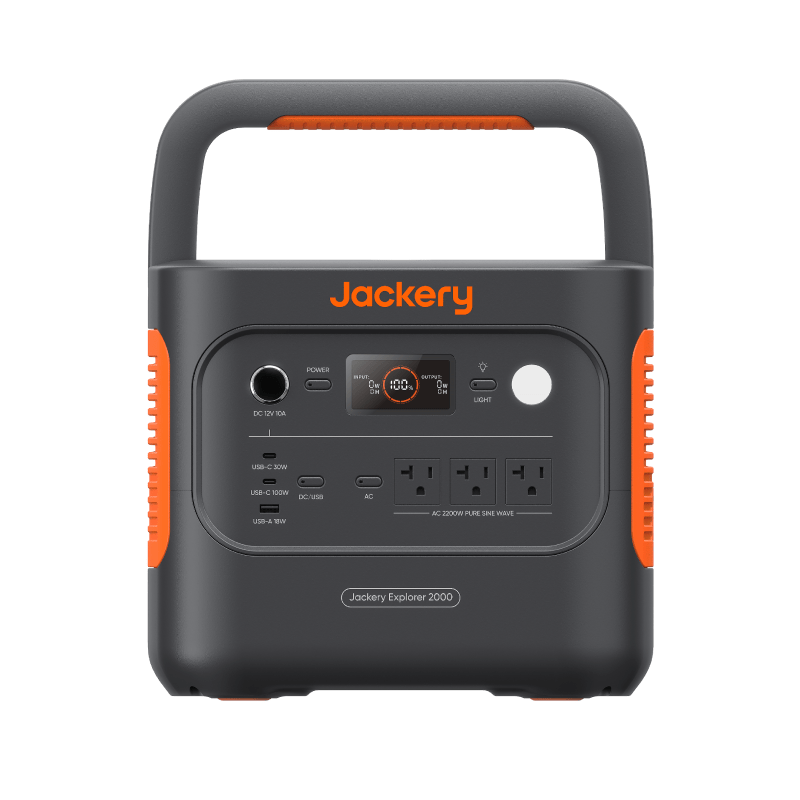
Jackery Explorer 2000 v2 Portable Power Station
2,042Wh
2,200W AC
4,400W surge
$700–$1,100
The only station in our catalog with both the surge headroom to shrug off pump starts (its published 4,400W rating roughly doubles the top of a typical 1/3 HP start spike) and enough capacity for a long storm night of cycling.
Pump-on time at 800W: ≈ 1 hr 57 min of actual pumping per charge
Steady rain (6 pump-min/hour): ≈ 19 hr 32 min of storm coverage
Heavy inflow (12 pump-min/hour): ≈ 9 hr 46 min
Jackery advertises sub-20ms switchover for pass-through use — a claim written for electronics-class loads. Verify pass-through behavior with a pump motor with the manufacturer before trusting it hands-off.
Price last checked 2026-07-08 · not hands-on tested by
us — verify capacity, output, surge rating, and current price on the listing.
A 1kWh-class unit whose 2,700W surge rating still clears a typical 1/3 HP start with margin. Roughly an hour of pump-on time per charge — a real answer for evening-length outages — and expandable with add-on batteries if storms argue for more.
Pump-on time at 800W: ≈ 59 min per charge
Steady rain (6 pump-min/hour): ≈ 9 hr 48 min of coverage
Price last checked 2026-07-09 · not hands-on tested by
us — verify capacity, output, surge rating, and current price on the listing.
Similar capacity and price class, with six AC outlets and a fast wall recharge between outage waves. Its 2,400W surge rating sits exactly at the top of the typical 1/3 HP start range — no margin.
Pump-on time at 800W: ≈ 1 hr 1 min per charge
Only choose this one after measuring or reading your pump's actual start draw — if the data plate or a clamp meter says the spike exceeds 2,400W, it will trip offline exactly when you need it.
Price last checked 2026-07-08 · not hands-on tested by
us — verify capacity, output, surge rating, and current price on the listing.
Prices last checked between 2026-07-08 and 2026-07-09
Surge first: the spec that disqualifies most stations
A sump pump is a motor, and motors gulp at start-up. A pump running at 800W commonly demands
1,600–2,400W for the moment
the impeller spins up — and it repeats that demand every time the float switch trips, dozens of
times a night in real rain. A station whose surge (peak) rating can't clear the spike doesn't
run the pump slowly; it faults and stops. That single spec eliminates every small and mid-size
station from this job, which is why the picks above are the large end of our catalog. Larger
pumps raise the bar further: 1/2 HP units run around 1050W and their start spikes
can exceed what any portable station we list will hold — check your pump's data plate before
buying anything.
The energy math: count pump-on minutes, not hours of outage
Unlike a fridge, a sump pump's duty cycle has no typical value — it is a direct function of how
much water is coming in. So instead of pretending to know your inflow, here is the same shared
formula (85% inverter efficiency, 10% reserve) worked across three stated assumptions for a
12-hour outage:
Battery needed for a 12-hour outage at 800W running watts, by cycling rate
Assumed inflow
Pump-on time per hour
Total pump-on time
Battery capacity to shop for
Occasional cycling
~3 min
36 min
627 Wh
Steady rain
~6 min
1 hr 12 min
1,255 Wh
Heavy inflow
~12 min
2 hr 24 min
2,510 Wh
The cycling rates are assumptions, not measurements — time your own pump during the next hard
rain (seconds per cycle × cycles per hour). The heavy-inflow row (2,510 Wh)
already exceeds the largest station we list, which is the honest signal that sustained heavy
pumping is generator-or-dedicated-system territory.
A useful anchor: one hour of continuous pumping at 800W needs about
1,046 Wh of recommended capacity. Whatever your inflow turns out to
be, multiply your real pump-on hours by that figure and you have your target.
Where a battery honestly is — and isn't — the answer
A portable power station earns this job when outages are hours long, inflow is moderate, and
you want something silent that lives safely in the basement with no fuel, no exhaust, and no
20-foot rule. It stops being the answer when storms run days or the pump barely rests:
our generator vs battery guide is
blunt that pumps on multi-day outages favor a generator. There are also purpose-built
battery-backup sump systems (a second DC pump on its own charger) and water-powered backup
pumps — we don't review either, but for a flood-prone basement they belong on your comparison
list alongside anything on this page.
Some links on this page may be paid links. If you buy through them, Cynosure LLC may earn a
commission at no extra cost to you. We do not claim to have personally tested products unless
clearly stated.
The link opens the Multi-Device Load Builder with one hour of continuous pumping. The builder counts the pump at full running watts — so treat the hours field as total pump-ON time, not clock time, and scale it to how often your pump actually cycles.
Compare the picks side by side
Some links on this page may be paid links. If you buy through them, Cynosure LLC may earn a
commission at no extra cost to you. We do not claim to have personally tested products unless
clearly stated.
Stations with the surge headroom for pump duty
Product
Capacity
Output
Ports
Weight
Est. price
Ideal for
Link
Jackery Explorer 2000 v2 Portable Power StationJackery
2,042Wh
2,200W AC
AC ×3 (2200W total, 4400W surge), USB-C 100W, USB-C 30W, USB-A 18W, 12V car port (120W)
39.5 lb
$700–$1,100
Days of essentials during long outages, A full-size refrigerator in duty cycles, High-draw devices up to 2,200W, Sub-20ms switchover keeps a router or NAS online when the grid drops
4× AC outlet (1800W, 2700W surge), 2× USB-C (100W), 2× USB-A, Car port
27 lb
$499–$999
Carrying a fridge plus electronics through a multi-hour outage, Home backup you can expand later (to 2048Wh+ with add-on batteries), Fast recharge — roughly 0–80% in under an hour
AC ×6 (1800W total, 2400W surge), USB-C 100W, USB-C 30W, USB-A ×2 (12W), 12V car port (120W)
28.4 lb
$400–$650
Multi-day phone and internet backup, A full-size or mini fridge in duty cycles (1800W continuous, 2400W surge), Family camping trips with several devices at once, Fast top-ups between outages — 80% in 43 minutes from the wall
Prices last checked between 2026-07-08 and 2026-07-09
Real products we recommend for this scenario — we haven't hands-on tested them, so confirm current specs and price on the listing. We may earn a commission, at no extra cost to you.
The printable checklist now — then short, occasional notes when one of our recommended picks changes or we spot a real price drop. Nothing on a schedule, unsubscribe anytime.
Frequently asked questions
How many watts does a sump pump use?+
Typical residential pumps run about 400–1050W while pumping — a common 1/3 HP unit sits near 800W. The catch is start-up: the motor commonly surges 2–3× its running watts for a moment (roughly 1,600–2,400W for a 800W pump), and the battery's surge rating has to clear that spike every single time the float switch trips. Your pump's data plate lists its own numbers.
How long will a portable power station run a sump pump?+
Count pump-on time, not clock time. Using our published assumptions, a 2,000Wh-class station buys roughly 1 hr 57 min of actual pumping at 800W. If the pump cycles about 6 minutes per hour in steady rain, that stretches to roughly 19 hr 32 min of storm coverage; in heavy inflow at 12 minutes per hour, about half that. How often your pump runs is the whole question — watch it during the next hard rain.
Will the pump restart automatically when the grid drops?+
Only if the pump is plugged in through the station and the station keeps its AC output live in pass-through mode. Manufacturer switchover claims are typically written for electronics, not motor loads — verify with the station maker that pass-through holds up with a pump motor, and test it deliberately. The float switch handles the rest once the outlet is live.
Is a battery enough for a multi-day storm?+
Honestly: for heavy, sustained inflow, usually not. Our heaviest scenario (12 pump-minutes per hour) exceeds the capacity of the largest station we list in under a day. If your basement floods hard and long, the sound engineering answers are a generator, a dedicated battery-backup sump system with its own DC pump, or a water-powered backup pump — none of which we review. A portable station is the right tool for shorter outages and lighter inflow, and it is safe to run indoors.
Affiliate disclosure
Some links on this page may be paid links. If you buy through them, Cynosure LLC may earn a
commission at no extra cost to you. We do not claim to have personally tested products unless
clearly stated.
Calculations are estimates only. Real runtime depends on battery age, inverter efficiency, device behavior, temperature, surge loads, manufacturer limits, and actual measured wattage. Always verify product specifications before buying or relying on a setup.
This site provides planning estimates, not electrical, medical, or emergency safety advice.