Best picks · RV & vanlife Published July 9, 2026

Best Power Station for RV & Vanlife

On the road there's no wall outlet coming back in a few hours — the battery IS the grid. Here's a real daily energy budget for van living, the recharge math that actually sustains it, and the stations we'd pick.

Our RV & vanlife picks

Some links on this page may be paid links. If you buy through them, Cynosure LLC may earn a commission at no extra cost to you. We do not claim to have personally tested products unless clearly stated.

Jackery

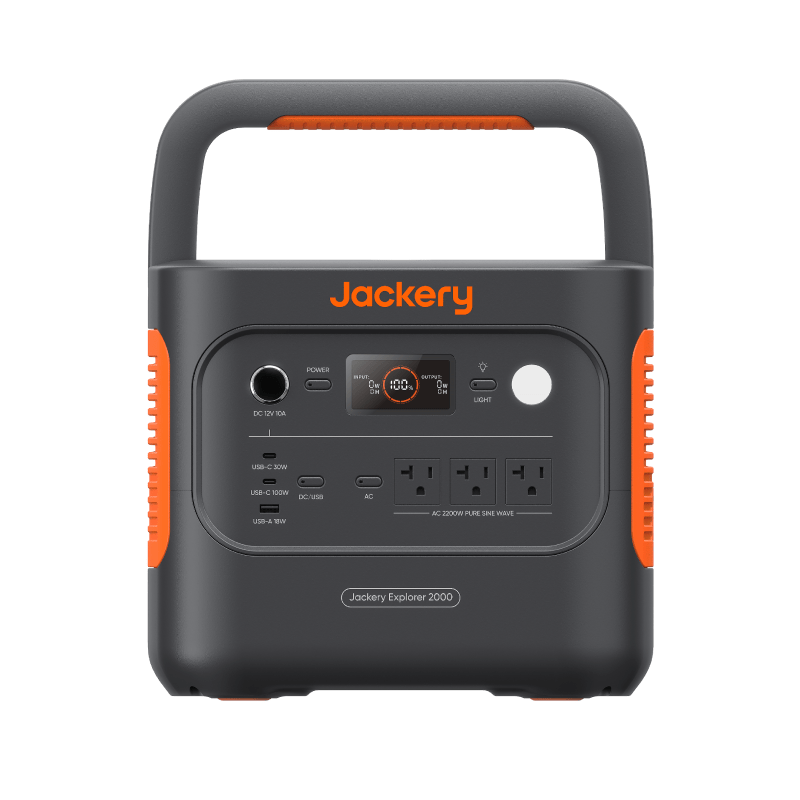
Jackery Explorer 2000 v2 Portable Power Station

  • 2,042Wh
  • 2,200W AC
  • $700–$1,100

If your pattern includes parked days with no recharge — boondocking without sun, work sites, winter — the math points here: our full worked day needs ~1,522 Wh recommended, and this is the only station we list that covers it solo with margin.

  • Worked van day: roughly a day and a third per charge (~1,562 Wh usable vs ~1,164Wh/day)

Nearly 40 lb and the most expensive pick on this page — buy the capacity only if your recharge options genuinely can't keep up with a 1,000Wh unit.

Price last checked 2026-07-08 · not hands-on tested by us — verify capacity, output, surge rating, and current price on the listing.

Jackery

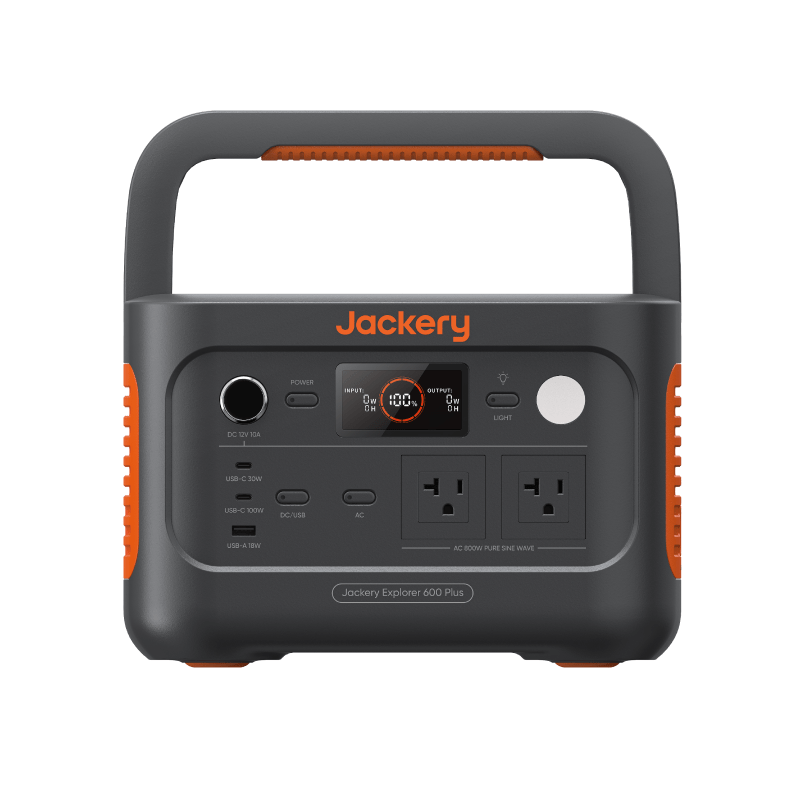
Jackery Explorer 600 Plus Portable Power Station

  • 632Wh
  • 800W AC
  • $300–$500

Drop the fridge (cooler instead) and the same day budget falls to ~444Wh — about 580 Wh recommended. This mid-size unit covers that with margin at a weight you can carry to a campsite.

  • No-fridge day (~444Wh): a full day per charge with a bit of margin (~483 Wh usable)

Price last checked 2026-07-08 · not hands-on tested by us — verify capacity, output, surge rating, and current price on the listing.

Prices last checked between 2026-07-08 and 2026-07-09

The math: a real day on the road

Sizing for vanlife is a daily-budget problem, not a single-device problem. Here is a worked day using typical wattages from our Device Wattage Library — the hours are stated assumptions you should edit to match your life, which is exactly what the Load Builder links below do:

A worked vanlife day, device by device
Device Typical draw Assumed use Energy per day
Mini fridge 60W × 50% duty 24 h — 12V/AC compressor fridge, cycling all day 720 Wh
2× LED light 8W 4 h — evening light 64 Wh
Small fan 30W 8 h — sleeping in warm weather 240 Wh
Laptop 50W 2 h — a bit of work or a movie 100 Wh
2× Smartphone 10W 2 h — two phones charging 40 Wh
Total at the devices 1,164 Wh

Grossed up for inverter losses (85%) and a 10% reserve — our standard published formula — that day needs about 1,522 Wh of battery if nothing recharges it. Without the fridge it drops to roughly 580 Wh; the fridge alone is about 941 Wh. The fridge is the budget — everything else is noise around it.

The recharge habit beats the bigger battery

A battery that only drains is a countdown timer. What makes van power sustainable is closing the daily loop: charge from the 12V port while driving, from a panel while parked, from shore power when it exists. A 100W panel in reasonable sun returns about 315 Wh per day under our published solar assumptions (4.5 peak sun hours at 70% real-world efficiency) — roughly the fridge's daily bill, but not the whole day's. Check your own panel-battery pairing with the Solar Recharge Calculator.

One more watt-stretcher: run 12V devices (the fridge above all) straight from the station's DC output instead of through the AC inverter. Skipping the conversion can stretch every watt-hour 10–15% further — that's what the DC cable kit in the comparison table is for, and the habit our camping guide calls 12V-first.

What we're not covering

This page sizes portable power stations — the drop-in option that needs no installation and moves between rig and house. Permanently installed RV house-battery systems (lithium banks, DC-DC chargers, inverter-chargers) can be the better answer for full-timers, but they're an electrical project with its own safety questions, and we don't review that gear. If a battery upgrade bolted into the rig is where you're headed, treat this page as the sizing warm-up, not the shopping list.

Size it yourself for your exact gear

Some links on this page may be paid links. If you buy through them, Cynosure LLC may earn a commission at no extra cost to you. We do not claim to have personally tested products unless clearly stated.

The links open the Multi-Device Load Builder pre-loaded with the van plan from this page — overnight or full-day. Swap in your own devices and hours; the fridge duty cycle is applied automatically, exactly as in the math above.

Compare the picks side by side

Some links on this page may be paid links. If you buy through them, Cynosure LLC may earn a commission at no extra cost to you. We do not claim to have personally tested products unless clearly stated.

Vanlife picks: stations, panel, and DC cabling
Product Capacity Output Ports Weight Est. price Ideal for Link
Jackery Explorer 600 Plus Portable Power Station Jackery 632Wh 800W AC AC ×2 (800W total, 1600W surge), USB-C 100W, USB-C 30W, USB-A 18W, 12V car port 16.1 lb $300–$500 A full laptop workday plus phone charging, A day or more of router and modem backup, Weekend camping electronics, Fans, lights, and a CPAP-class device together
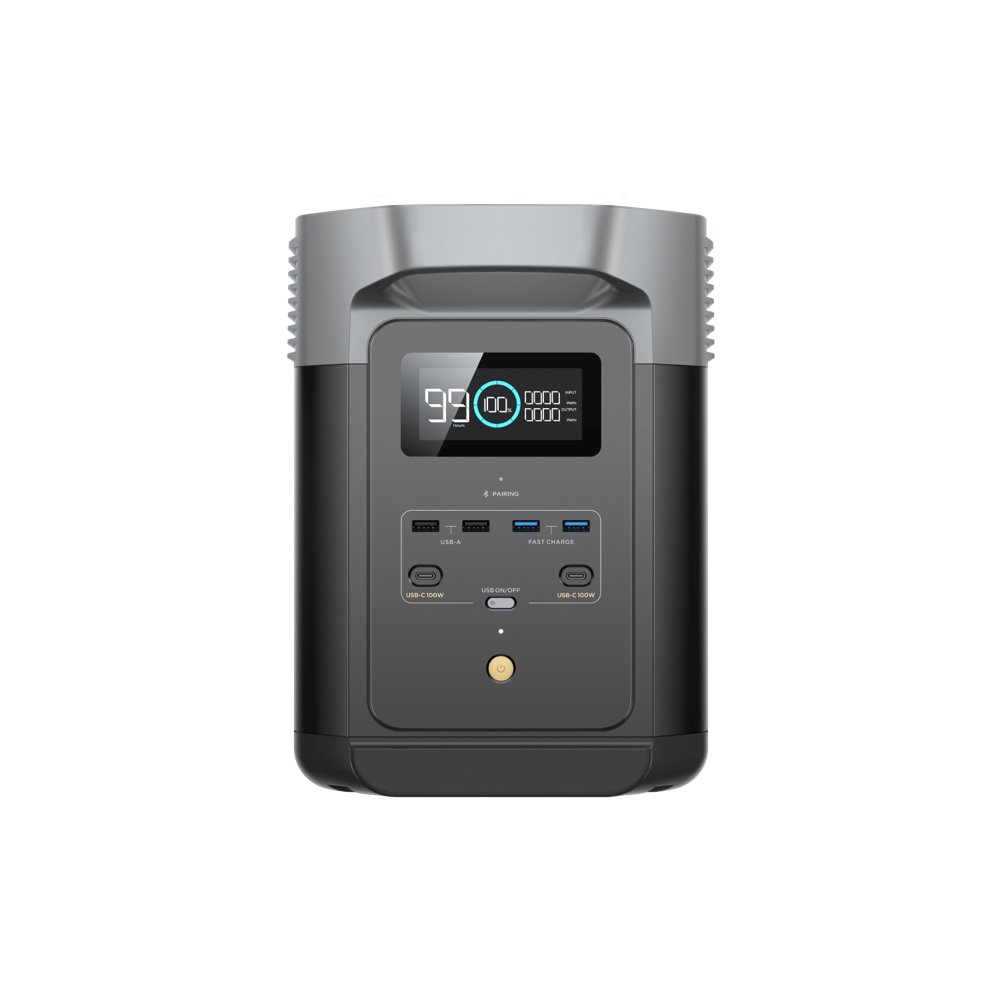
EcoFlow DELTA 2 Portable Power Station EcoFlow 1,024Wh 1,800W AC 4× AC outlet (1800W, 2700W surge), 2× USB-C (100W), 2× USB-A, Car port 27 lb $499–$999 Carrying a fridge plus electronics through a multi-hour outage, Home backup you can expand later (to 2048Wh+ with add-on batteries), Fast recharge — roughly 0–80% in under an hour
Jackery Explorer 2000 v2 Portable Power Station Jackery 2,042Wh 2,200W AC AC ×3 (2200W total, 4400W surge), USB-C 100W, USB-C 30W, USB-A 18W, 12V car port (120W) 39.5 lb $700–$1,100 Days of essentials during long outages, A full-size refrigerator in duty cycles, High-draw devices up to 2,200W, Sub-20ms switchover keeps a router or NAS online when the grid drops
Jackery SolarSaga 100 Air Solar Panel Jackery 100W panel DC output to power station (100W max), USB-C, USB-A 7.1 lb $250–$300 Recharging 300–1,000Wh stations off-grid, Camping trips longer than a weekend, Keeping a small station topped up during extended outages
DC charging cables & adapters By category XT60 to DC5521/5525, 12V car plug adapter, Barrel size adapter set 0.5–1.5 lb $20–$50 Running 12V devices straight from a station's DC port, Connecting solar panels to power stations, Skipping the AC inverter to stretch battery life

Prices last checked between 2026-07-08 and 2026-07-09

Real products we recommend for this scenario — we haven't hands-on tested them, so confirm current specs and price on the listing. We may earn a commission, at no extra cost to you.

Get the free Emergency Power Planning Checklist

The printable checklist now — then short, occasional notes when one of our recommended picks changes or we spot a real price drop. Nothing on a schedule, unsubscribe anytime.

Frequently asked questions

What size power station do I need for vanlife?

It hinges on the fridge. Our worked day — compressor fridge cycling 24 hours plus lights, a fan, a laptop, and two phones — comes to about 1,164Wh at the devices, which is roughly 1,522Wh of recommended capacity for a single no-recharge day. Drop the fridge and the same day is about 444Wh (580Wh recommended) — small-station territory. Most full-timers land on a 1,000Wh-class unit plus a daily recharge habit rather than one giant battery.

Can a power station run a 12V compressor fridge?

Yes — that's the core vanlife load. A mini-fridge-class compressor unit runs at about 40–100W but only part of the time (we apply the 50% duty cycle our wattage library documents), averaging out to roughly 720Wh per day. Two caveats: compressor start-up briefly surges 2–3× running watts, so check the station's surge rating, and running the fridge from the station's 12V DC port instead of through the AC inverter skips conversion losses and stretches every watt-hour.

How do I recharge off-grid?

Three stacking paths. Driving: the station's 12V car-port charging turns every drive into a recharge. Solar: a 100W panel in reasonable sun puts back roughly 315Wh per day using our published solar assumptions — real yield, not the label number. Shore power: campground hookups refill fast-charging stations in about an hour. The honest framing is that a 1,000Wh station with a daily recharge habit beats a 2,000Wh station you can only fill in town.

Should I just buy the 2,000Wh unit?

Only if your pattern includes genuinely stationary days — no driving, no hookups, limited sun — where the battery must carry everything alone. Our worked heavy day drains a 2,000Wh-class station in a bit over a day, and that class runs $700–$1,100 at 39.5 lb. If you drive most days or carry a panel, the 1,000Wh class covers the same life for less money and weight.

Affiliate disclosure

Some links on this page may be paid links. If you buy through them, Cynosure LLC may earn a commission at no extra cost to you. We do not claim to have personally tested products unless clearly stated.

Calculations are estimates only. Real runtime depends on battery age, inverter efficiency, device behavior, temperature, surge loads, manufacturer limits, and actual measured wattage. Always verify product specifications before buying or relying on a setup.

This site provides planning estimates, not electrical, medical, or emergency safety advice.