Power Preflight Load Builder
Multi-Device Power Station Calculator
The Load Builder shows what one-device calculators miss. Pick everything you need to keep running, set your hours, and get the full picture: total watts, daily watt-hours, runtime by battery size, and the capacity to shop for — with fridge duty cycles handled for you.
Build your load
Add quantities for every device in your plan — totals update as you go. Typical wattages come straight from our Device Wattage Library.
Reserve gauge: the mission uses 90 percent of the recommended capacity; 10 percent stays in reserve. Recommended size 533 Wh.
533 Wh
GOTo run 2× Smartphone, 1× Router + modem combo, 2× LED light for8 hours (8 hr), shop for stations rated around this figure or higher.
“Energy over your window” and “daily consumption” are what your devices draw before conversion losses; “minimum energy” grosses the window up for inverter losses, and the headline number adds the 10% planning reserve.
What this class typically looks like:toolbox-size stations that can run several devices at once for a day or more.Compare stations in this class.
Your plan includes a motor or compressor whose startup demand may exceed running watts. The station’s continuous AC output must exceed your51W simultaneous draw. Use the Device Wattage Library's source-based startup allowance when one is present; otherwise verify the exact model's start demand. This builder does not calculate or certify surge compatibility.
Your plan includes a medical device. Estimates are not good enough here — confirm exact power requirements with the device manufacturer and your doctor before relying on battery backup.
Runtime by battery size
Same shared formula as theBattery Runtime Calculator — your duty-cycle average draw against each class, with 85% inverter efficiency and a 10% reserve held back.
Copy link to this plan
Link copied to your clipboard.
Keep this plan current
Get the printable planning checklist now, plus short notes when a pick on this page changes or genuinely drops in price. Occasional only — unsubscribe anytime.
How this is calculated
The builder sums your devices, then hands the totals to the same shared calculation library as every other tool on this site:
runningWatts = Σ (deviceWatts × quantity)averageWatts = Σ (deviceWatts × dutyCycle × quantity)requiredWh = (averageWatts * desiredHours) / (efficiency / 100)recommendedWh = requiredWh / (1 - reserve / 100)In plain English: running watts is everything switched on at once — the number a station’s continuous AC output rating must beat. Average watts applies an explicit editorial duty assumption to the two refrigerator rows: 50% for a mini fridge and 40% for a full-size refrigerator. The cited ENERGY STAR source does not publish those percentages, so replace them with your model's annual energy data or a representative 24-hour measurement before a purchase. Energy needs are sized from the assumed average, grossed up for inverter losses, and topped with a planning reserve — exactly thePower Station Sizing formula. The runtime-by-size rows use theBattery Runtime formula unchanged.
Default assumptions
- 85% efficiency — a typical figure for AC output through an inverter. Direct USB-C or 12V DC output loses less.
- 10% reserve — headroom for battery aging, cold weather, and estimate error, so the recommendation survives contact with reality.
- Editorial duty cycle for the two fridge rows only — every other device counts at its full planning watts. The 50% and 40% fridge values are transparent defaults, not published values for a particular refrigerator.
The full method — and why we picked these defaults — is onHow we estimate.
What to do with this number
Some links on this page may be paid links. If you buy through them, Cynosure LLC may earn a commission at no extra cost to you. We do not claim to have personally tested products unless clearly stated.
Backup power stations by capacity class
Once your plan has a watt-hour target, compare every station in our catalog — smallest to largest — on output, weight, and price. Prices last checked between 2026-07-08 and 2026-07-09; review overdue — verify current listings.
Some links on this page may be paid links. If you buy through them, Cynosure LLC may earn a commission at no extra cost to you. We do not claim to have personally tested products unless clearly stated.
| Product | Capacity | Output | Ports | Weight | Est. price | Ideal for | Link |
|---|---|---|---|---|---|---|---|
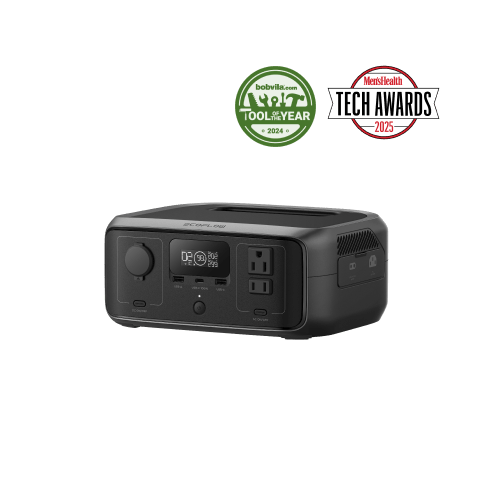
| EcoFlow RIVER 3 Portable Power StationEcoFlow | 245Wh | 300W AC | 3× AC outlet (300W, 600W X-Boost), USB-C, USB-A, Car port | 8.4 lb | $149–$219 | Keeping a router, modem, phones and small electronics running for hours, A light, grab-and-go outage or travel unit, Fast recharge with sub-20ms UPS passthrough | See current price |
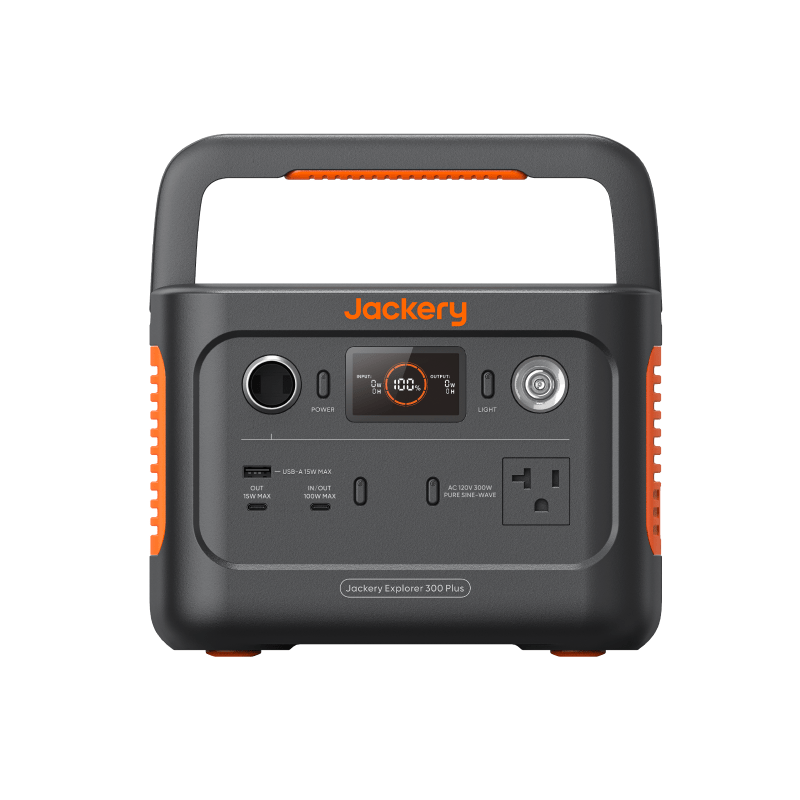
| Jackery Explorer 300 Plus Portable Power StationJackery | 288Wh | 300W AC | AC ×1 (300W, 600W surge), USB-C ×2 (100W max), USB-A ×1, 12V car port | 8.27 lb | $200–$300 | Router and modem backup for a workday, Charging phones and tablets for days, A laptop for a few hours via the 100W USB-C port, Car trips and short outages | See current price |
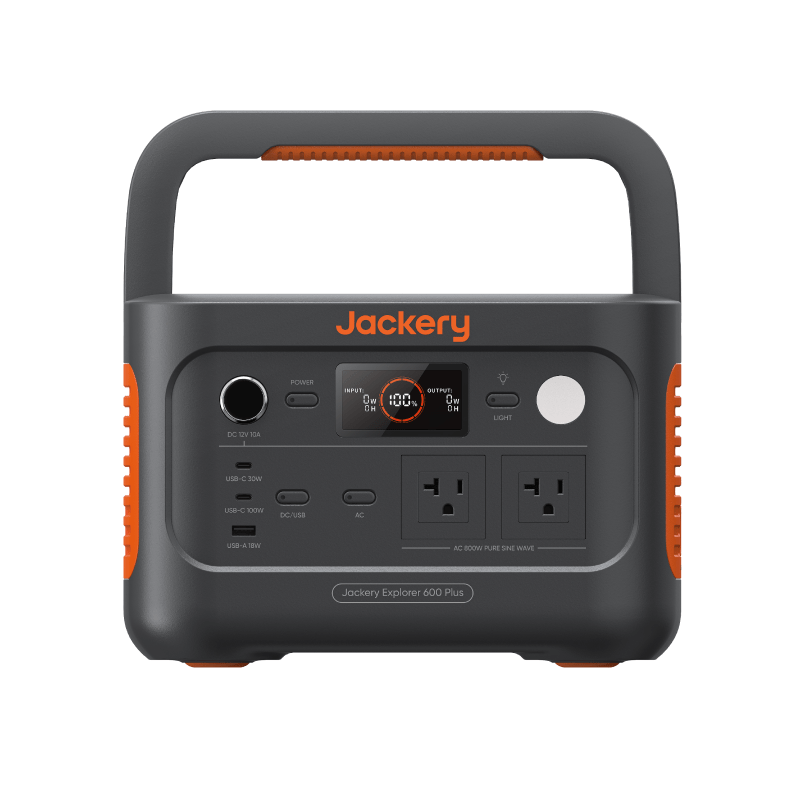
| Jackery Explorer 600 Plus Portable Power StationJackery | 632Wh | 800W AC | AC ×2 (800W total, 1600W surge), USB-C 100W, USB-C 30W, USB-A 18W, 12V car port | 16.1 lb | $300–$500 | A full laptop workday plus phone charging, A day or more of router and modem backup, Weekend camping electronics, Fans, lights, and a CPAP-class device together | See current price |
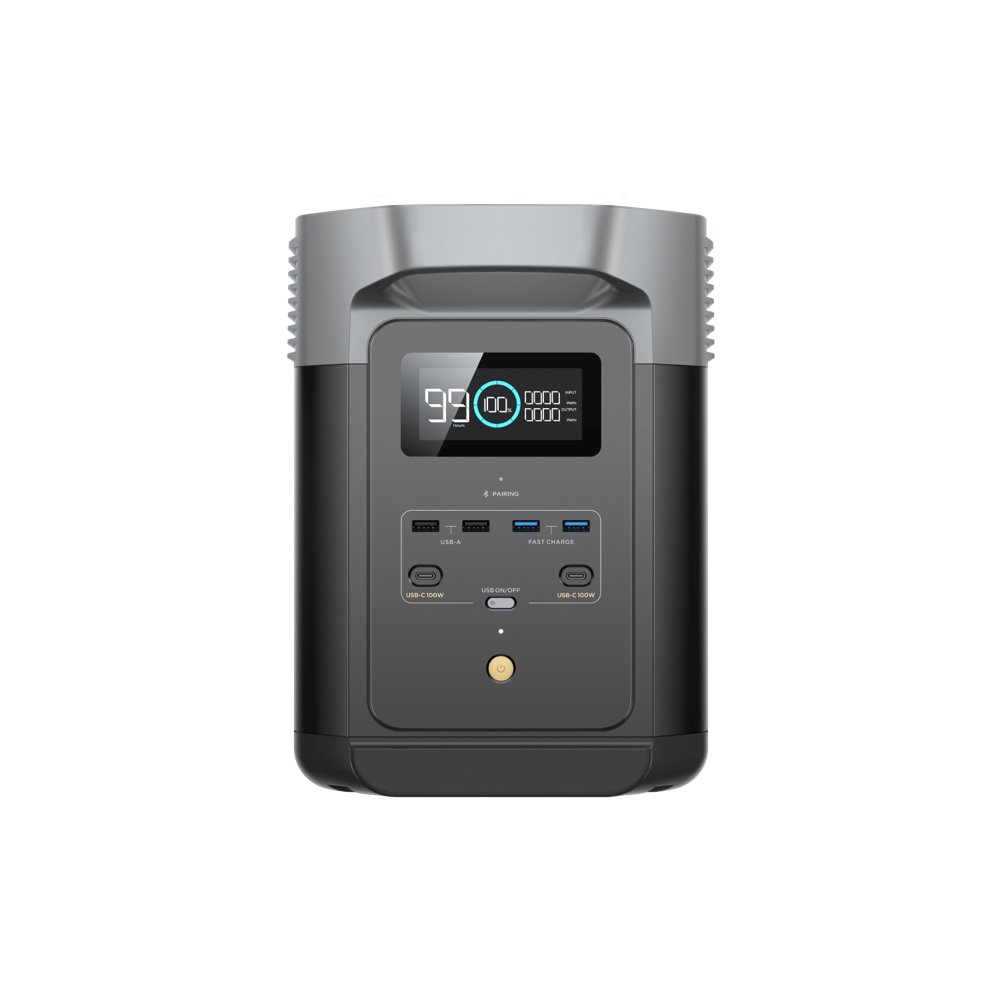
| EcoFlow DELTA 2 Portable Power StationEcoFlow | 1,024Wh | 1,800W AC | 4× AC outlet (1800W, 2700W surge), 2× USB-C (100W), 2× USB-A, Car port | 27 lb | $499–$999 | Carrying a fridge plus electronics through a multi-hour outage, Home backup you can expand later (to 2048Wh+ with add-on batteries), Fast recharge — roughly 0–80% in under an hour | See current price |
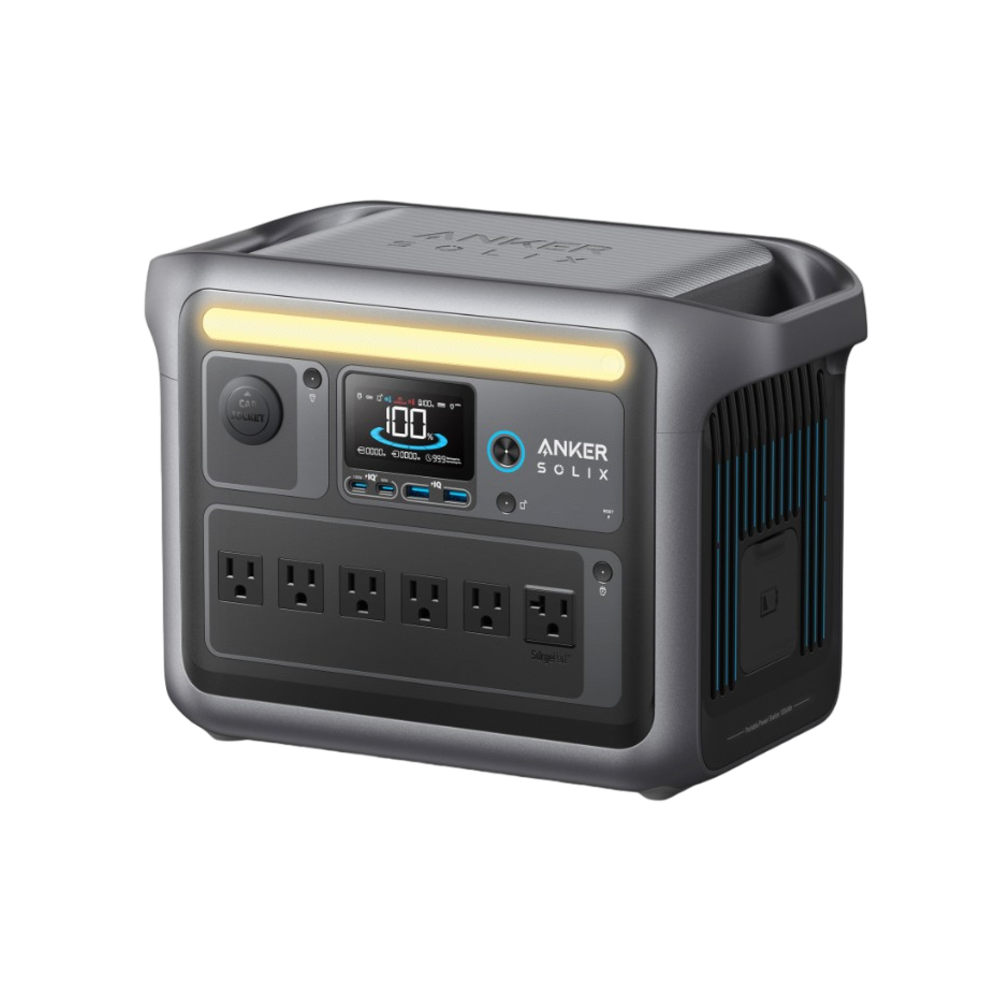
| Anker SOLIX C1000 Portable Power StationAnker | 1,056Wh | 1,800W AC | AC ×6 (1800W total, 2400W surge), USB-C 100W, USB-C 30W, USB-A ×2 (12W), 12V car port (120W) | 28.4 lb | $400–$650 | Multi-day phone and internet backup, A full-size or mini fridge in duty cycles (1800W continuous, 2400W surge), Family camping trips with several devices at once, Fast top-ups between outages — 80% in 43 minutes from the wall | See current price |
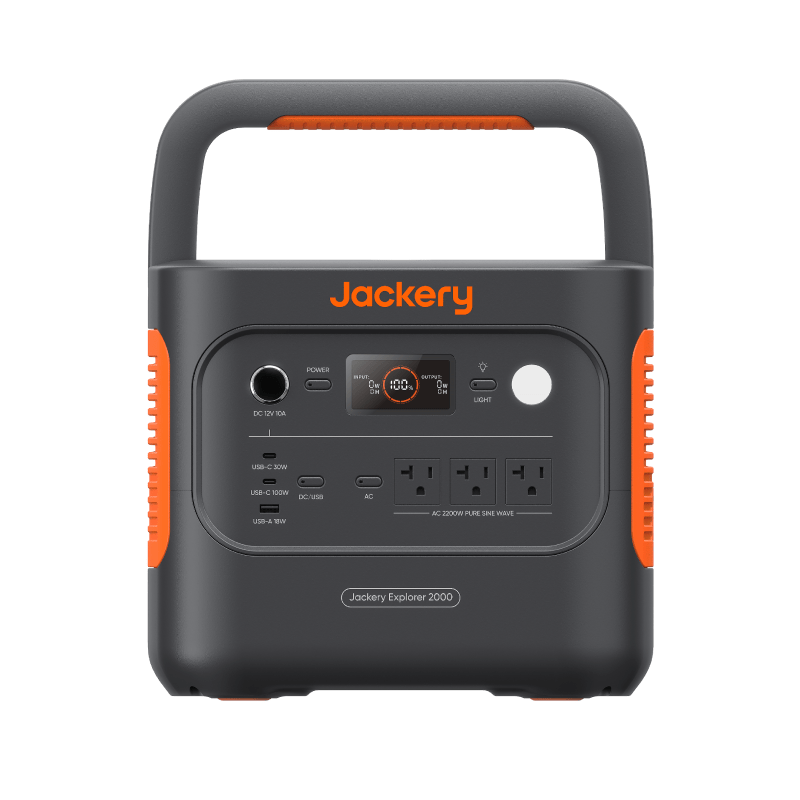
| Jackery Explorer 2000 v2 Portable Power StationJackery | 2,042Wh | 2,200W AC | AC ×3 (2200W total, 4400W surge), USB-C 100W, USB-C 30W, USB-A 18W, 12V car port (120W) | 39.5 lb | $700–$1,100 | Days of essentials during long outages, A full-size refrigerator in duty cycles, High-draw devices up to 2,200W, Sub-20ms switchover keeps a router or NAS online when the grid drops | See current price |
Prices last checked between 2026-07-08 and 2026-07-09; review overdue — verify current listings
Specific products picked for each class — we haven't hands-on tested them, so verify capacity, continuous output, and surge ratings on the current listing. Commissioned links, at no extra cost to you.
Frequently asked questions
Does "running watts" mean everything is on at the same time?
Yes — the running-watts total assumes every device in your plan draws at once, which is the number to check against a station’s continuous AC output rating. The duty-cycle average is lower because compressor loads like fridges only run part of the time, and that average is what determines how many watt-hours you need.
How is the duty-cycle math applied?
Only the two refrigerator rows use a duty-cycle adjustment: 50% for a mini fridge and 40% for a full-size refrigerator. Those are explicit PowerPreflight editorial planning assumptions, not ENERGY STAR or Department of Energy values for your model. Every other device counts at its full planning watts. Replace the assumption with annual energy data or a representative 24-hour measurement when the purchase depends on it.
Can I save or share my plan?
Yes — your device list and hours are written into the page address as you edit, and the "Copy link to this plan" button puts that address on your clipboard. Nothing is sent to or stored on our servers; the plan lives entirely in the link.
Why is the recommended size bigger than watts × hours?
Two honest adjustments. Converting battery power to AC through an inverter typically consumes about 15% of the energy, so we divide by 85% efficiency. Then we add a 10% planning reserve for battery aging, cold weather, and estimate error. Both assumptions are published and adjustable in the single-device Power Station Sizing Calculator.
Calculations are estimates only. Real runtime depends on battery age, inverter efficiency, device behavior, temperature, surge loads, manufacturer limits, and actual measured wattage. Always verify product specifications before buying or relying on a setup.
Affiliate disclosure
Some links on this page may be paid links. If you buy through them, Cynosure LLC may earn a commission at no extra cost to you. We do not claim to have personally tested products unless clearly stated.